

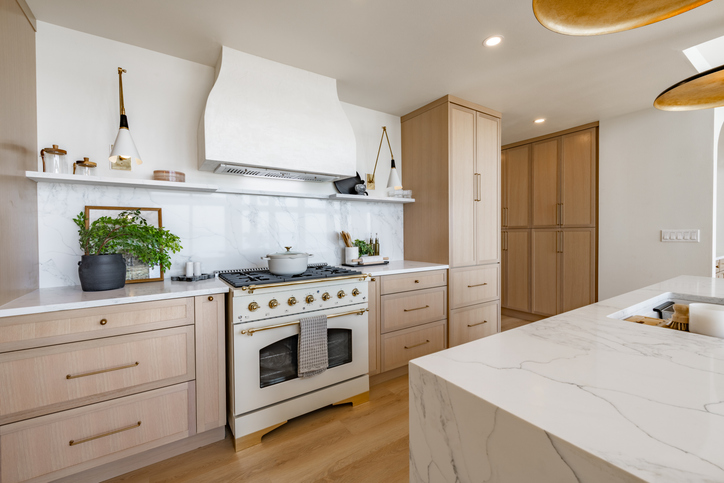
Stunning Kitchen Surfaces That Could Turn Your Dream Space into a Daily Hassle
It is so tempting just to look at a picture of shiny countertops when one is planning a kitchen remodel. They are the central feature in the room, which predetermines the style and sophistication. But aesthetics is not sufficient for those who spend much time on chopping, sauteing, and baking. We will cover what countertops are trending in 2026.
The wrong decision may result in a fruitless existence, in inadmissible smears, and in incurable scrapes. We will discuss ten common countertop materials, starting with the least convenient to use by serious home cooks, down to the most durable countertop in this complete guidebook. We base our analysis on such critical aspects as its durability against wear, spill resistance, high-temperature performance, and repairability of flaws. We will also briefly cover the cost factor since excessive spending in this area may compromise other, more important aspects such as cabinetry or even appliances. With this, you will have a better idea of what surface to pick at the end that can add to your cooking routine as opposed to slowing it down.
The secret of a successful kitchen is the combination of form and functionality. Lots of domestic owners are victims of materials that make it in the demonstration room and crumble when used in reality. An example to illustrate this is that natural stones that have a complex veining may convey a sense of luxuriousness, and their susceptibility to the normal acids, such as citrus or vinegar, may leave a bad impression on the appearance. On the other side, modern engineered alternatives consider durability and not compromising on appearance. We measure hardness on the Mohs scale, whereby 1 is as soft as talc, and 10 is diamond-tough. The porosity defines the rate at which liquids seep in and may lead to discoloration. Heat tolerance is used to indicate the ability of a hot skillet to leave a permanent scar, and repairability to indicate whether the damage can be buffed or if it needs a complete replacement. Prices are highly fluctuating, and the cheapest ones cost less than 50 dollars per square foot, while the most expensive can cost more than 200 dollars. Keep in mind that your countertop must reflect your lifestyle. If you have a lot of parties, then maybe you can bear a higher maintenance cost to get the wow factor, and busy families may need lower maintenance reliability. We shall now take a plunge into the rankings and begin with the ranks that appear godly but require excessive maintenance.
10. Onyx: A Visual Masterpiece with Practical Pitfalls
Everyone is attracted by the transparent look of Onyx countertops, which looks even more dramatic when it is lit at the bottom of a counter; it gives a dramatic and almost otherworldly appearance in the contemporary kitchen. This is soft calcite in form, a natural stone that has swirling patterns with either cream, amber, and green colours that can make a boring area a place of art. Nonetheless, to a person who cooks regularly, onyx is more of a drawback than an asset. Its low hardness level, which is usually between 3 and 4 according to the Mohs scale, means that it could easily be scratched by knives, utensils, or even heavy pots. Suppose you put a cast-iron skillet aside and see a fine line come out–it breaks a man’s heart to see that.
The second significant weakness is porosity; onyx takes up liquids almost instantly, making a simple wine spill a permanent stain unless addressed within a few seconds. The surface can be etched by acidic compounds, which are found in cooking, such as tomato sauce or lemon zest, and their gloss may be permanently lost. Heat limits are low, and the threats of cracking during abrupt temperature shifts, which are referred to as thermal shock, exist. There are not many repair choices – professional polishing may assist in solving some minor problems, yet the severe damage may lead to the necessity of replacement, costing $100-300 per square foot. Where onyx performs well at the low-traffic markets, such as the vanities in the bathrooms or the accent wall, in the busy kitchen, it requires oversight. Should you be fond of its appearance, you might want to think of the options, such as backlit quartz composites, which replicate the appearance but not the headaches. Finally, unless your kitchen is more of a display than a working one, avoid it to make meal preparation an anxious experience.
9. Limestone: Crunchy Beauty That Breaks in a Jiggery-Jiggery.
Limestone implies a warm and old-world feel to the kitchen as it reminds one of the charming European farmhouses with its gentle and natural tones and gentle textures. It is a sedimentary rock that can be either honed to a matte finish or polished with a slight luster so that it perfectly fits into the old-fashioned or transitional design. It costs between $50 and 150 per square foot, which most of the budgets can afford. However, to the serious cooks, the attraction of limestone soon disappears owing to its innate softness, 3-5 Mohs scale. Marks may be left by doing normal duties, such as slicing vegetables and dragging machines along, which can damage its beauty.
High porosity of the material is a scourge of its own; oils, juices, and even water can be absorbed into the material like a sponge to give dark spots that are difficult to eliminate. Sealing is only a temporary measure, but it is necessary to reapply after every few months, a burden on maintenance. Fruits or vinegars create pits, which are etched, making the surfaces vulnerable to grime. Though it can withstand moderate temperatures up to about 400 degrees Fahrenheit, it may fracture under extreme temperatures. The repairs can be done by honing or filling, which tends to affect the natural patina of the stone. Homeowners who have no problem with aging as a personality may accept this, but to people who want their surfaces clean, it is an endless fight. Use honed quartzite in its place and with better toughness. Limestone is an easygoing material, especially in the areas of backsplashes, but in the meal preparation center of the kitchen, it may transform even the happiest of culinary times into a sequence of wipe-downs and anxiety.
8. Marble: Elegant Timelessness with Temperamental Tendencies
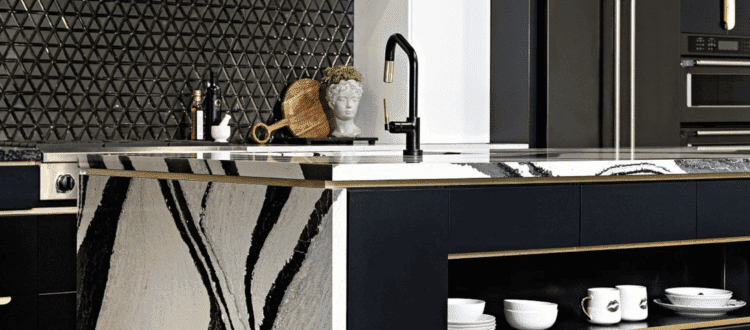
Luxury Marble counter has always been associated with luxury, and the veined luxury has been adorning palaces and now, luxury apartments. It is available in such classics as Carrara or bold Calacatta with a sophisticated range of colors, pure white, and dark grays, and is priced between $40 and 200 per square foot. To infrequent users, it is a dream, but serious chefs frequently find its 3 to 5 Mohs of hardness inadequate compared to the knife edges or the abrasive cleaners, leaving behind scratches that build up over time.
Stain resistance: average, although where the porosity is reduced by sealing, the stain can still permeate, except in cases where immediate cleaning is performed. Acidic conditions are the greatest enemy of real marble; the surface may be smoothed with wine, citrus, or even yogurt, leaving pale spots that some consider as elegant patina, others as defects. The heat tolerance is up to 480 degrees, and the heat can be briefly touched on warm pots, but with prolonged exposure, discoloration will occur. It is good to be repaired; small scratches can be buffed by the professional, giving back the lustre. Nevertheless, this involves continuous monitoring, and this may discourage hectic households. Marble works well in kitchens where aesthetics plays more of a key role than hard work, with protection being provided by cutting boards. In case you are a patina fan, then buy it, but otherwise, you can get the appearance with engineered solutions that do not have to maintain it.
7. Tile: Multipurpose and Frail at the Joints.
Tiled countertops are usually made of porcelain or ceramics and offer unlimited design options of patterns, colors, and sizes, which could replicate wood, stone, or metal. Their cost of between 10 and 80 per square foot is cheap and will last long on its own, the tiles being rated at 7 on Mohs, which can withstand scratches very well. They can withstand temperatures as high as 2,000 degrees, thereby being suitable when it comes to placing hot trays directly.
The grout lines are the Achilles heel of the product, where liquids are drained, and bacteria breed, making the product difficult to clean and posing hygiene issues. This is brought out in older installations that are decades old, with spills flowing over the sides. Large-format tiles of modern tile designs minimize grout, and the use of epoxy types increases resistance, but there is an important aspect, which is maintenance; they need to be regularly scrubbed. Porosity is different; the glazed ones are more protective against stains, whereas the unglazed ones absorb more. They are simple to fix; one can replace individual tiles, but this may be difficult to match.
6. Laminate: Cost-Effective Dependability and Limitations.
Laminate, which was not taken seriously, has evolved into prints with high definitions which appear to be made of granite or wood. It costs between $10 and 40 per square foot, and it is a blessing to those who aim to save money when renovating their homes, which can be useful for as long as 20 to 25 years with proper maintenance. It is also easy to clean using mild soap, and the surface is resistant to stains, courtesy of a protective layer.
Decent but not extraordinary, hard enough to scratch sharp objects, and hot pans burn permanently, with the melamine top melting. It is not porous and, therefore, cannot take deep stains, butedges can be easily chipped or damaged by water unless sealed. Poor heat tolerance- always use trivets. It is not very repairable, scratches cannot be sanded, and will usually need a complete overlay. Laminate provides a low entry point to the family or starters, with money saved to be spent elsewhere. Newer models are antimicrobial-coated to make them attractive. It is not posh, yet in a kitchen that is used in the real world, it does a good job without exceeding the budget.
5. Granite: Hard Rock with Unchanging Excellence.
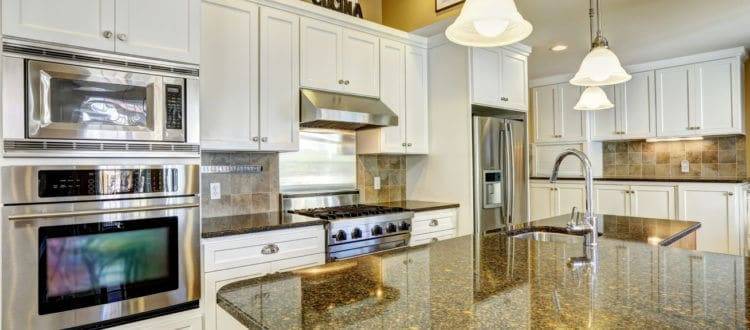
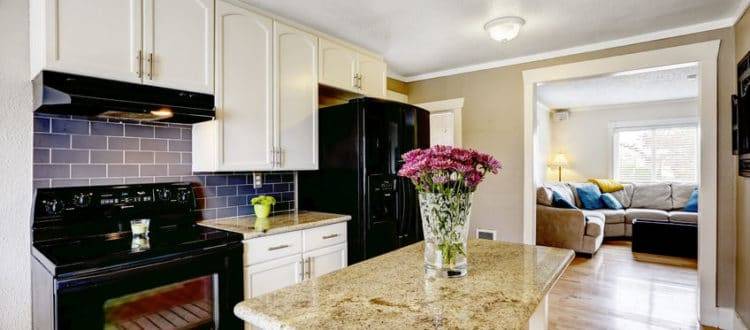
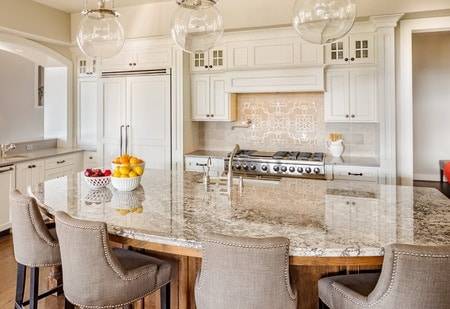
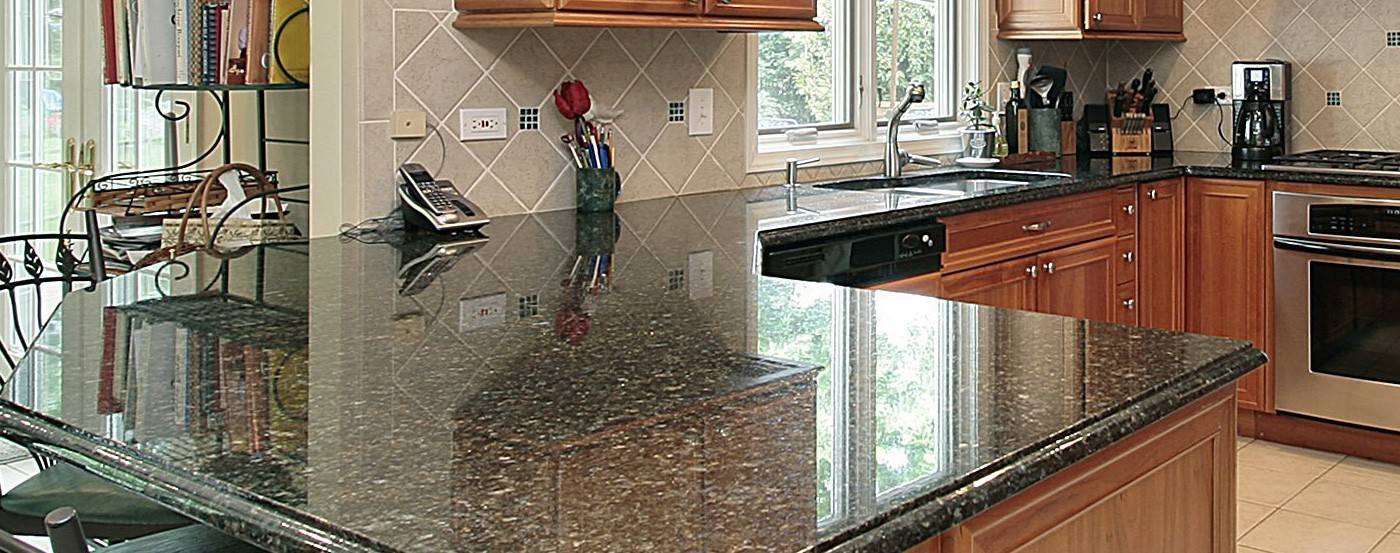
Granite counter continues to be a workhorse in terms of its natural range, more than 200 colors and designs, and ranges of speckled black to more exotic and exotic blues at $50-200/sf. A Mohs score of 6 to 8 means it can survive day-to-day abuse, such as chopping, without scratching so easily.
Annual sealing enhances resistance to stains because otherwise the natural porosity will absorb oils. It is also heat-resistant and can withstand up to 1,200 degrees, which is ideal for placing hot pans. It is possible to repair, fill the chips, and polish the scratches. Perfection is better concealed by leathered finishes than polished finishes. Granite is also applicable to outdoor kitchens, which are not sensitive to UV. For value, hunt remnants. It is a moderate decision of active cooks, the combination of beauty and brawn. Minor repairs will benefit in the long-run and become a resale booster.
4. Quartz Engineered: Contemporary Stone Convenience.
Engineered quartz consists of 90-95% crushed quartz and resins, forming a powerhouse that is non-porous with a hardness of 7 on Mohs. It has a range of 50-150 per square foot, and it resembles natural veining but does not vary.
No sealing is required; stains are easy to wipe off, and it is antibacterial, hence best used in food preparation. Heat limit 300-350 degrees—pads not to be scorched. Scratches are very infrequent, but deep ones cannot be sanded as a consequence of the resin. The chips require professionals to have them fixed. Homogenous appearance is a good fit in modern areas, yet it is not as organic to others. It is a winner for low-maintenance lovers, and the anxiety of spills is minimized. The hygiene is emphasized by commercial approvals. Quartz provides convenience to hectic lives.
3. Quartzite: Toughness as Natural and as Art.
Quartzite is a metamorphic sandstone, at 7-8 Mohs, due to its marble-like veins in whites and grays, 70-200 plus per square foot. Preferred like Taj Mahal because of its elegance.
Sealing helps in fighting porosity and improves stain resistance. It has more than 1000 degrees of heat, which is very helpful in the kitchen. Acid etching is low in comparison to marble. Companies are reflections of granite–polishable. It is durable enough to withstand a lot of use; however, patterns may become faddish. Quartzite balances natural beauty with grit, those who would like to have it. Authenticity Test, some are not what they are called. It is a high-end choice in terms of long-term attractiveness.
2. Porcelain Slab: Versatility of Ultra-Dense.
High-fired porcelain slabs are non-porous and score 7 on Mohs with a price of between $50 and 150/square ft. plus fabrication. They are perfect imitators of stones.
No sealing, does not stain, can resist acid, heat, up to 2000 degrees. Red lines are rare, edges weak–must be pro. Repairs are limited, and damage is rare to the rescue. Perfect for sleek designs, both interior and exterior. In the imitation which is not maintained, porcelain is the finest. Complicated cuts are more expensive, but they pay off in the long run.
1. Sintered Stone: The Strength of Strengths.
Sintered stone such as Dekton is a mixture of minerals, which are heated to very high temperatures, to a 7-8 Mohs (Dekton 8) non-porous, and priced at $55 to 115 per square foot. UV-resistant for outdoors.
Stains, etches, and heat (thousands of degrees) are no problem. Few scratches; edges are prone to chips, and certified specialists need repairs. Testimonials extol decades of perfect service. It is the best of the best to ensure worry-free cooking. Expensive and costly to make, yet incomparable in durability.
Takeaways
To conclude, there is no perfect countertop; suit yourself. Special mentions: Soapstone to heat, Corian to make repairs that are seamless, stainless steel to be hygienic, and concrete to make it have a unique eco-vibe. Spend sparingly- countertops not only influence resale, but they also balance the entire kitchen. Beautiful and functional space with informed choices.
Schedule Your Appointment Today