

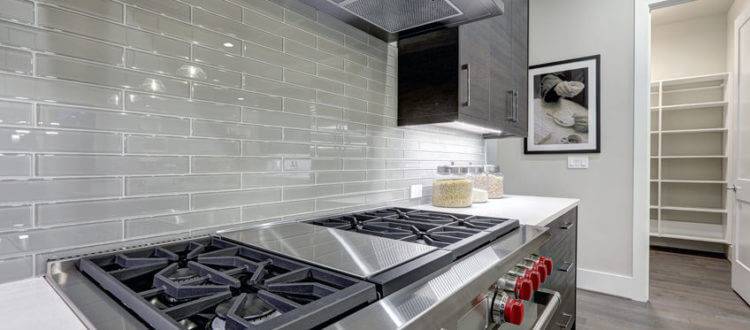
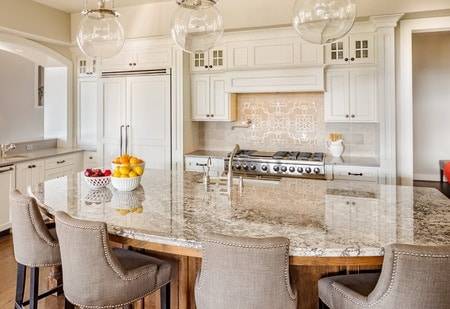
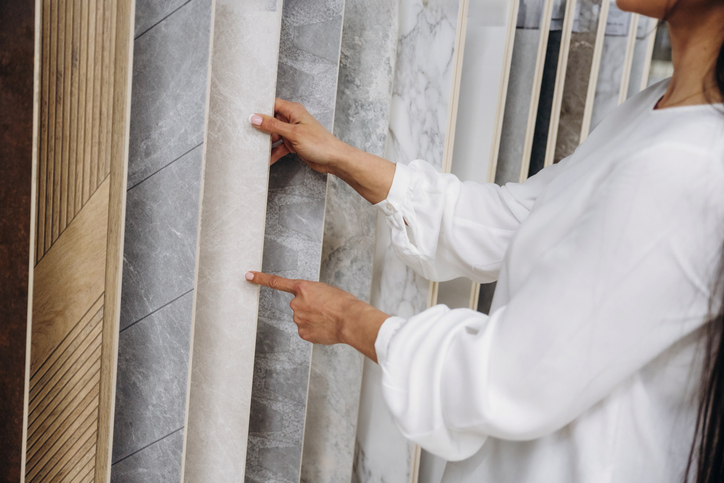
One of the most important choices you’ll make while remodeling your kitchen or bathroom in Orlando is whether to go with quartz or granite. These materials are beautiful, durable, and enhance the value of your house! They are, however, quite different in nature, and if you aren’t careful, you could end up spending years regretting your decision or paying for an unnecessary purchase.
This guide is a cut through the noise. We don’t just tell you facts that you can find anywhere; we’re going to tell you what things it is actually good for, and what things it is not. When finished, you’ll be able to identify which countertop you want in your Orlando home.
- The Fundamental Difference: Nature vs. Engineering
- Consistent Beauty vs. One-of-a-Kind Character
- Durability in Orlando’s Climate: Where Each Material Struggles
- Maintenance: The Real Cost Over Time
- 2026 Cost Comparison: Quartz vs Granite in Orlando
- Which Is Right for Your Orlando Kitchen?
- Which Is Right for Your Orlando Bathroom?
- Frequently Asked Questions
- See Both Materials in Person at Our Orlando Showroom
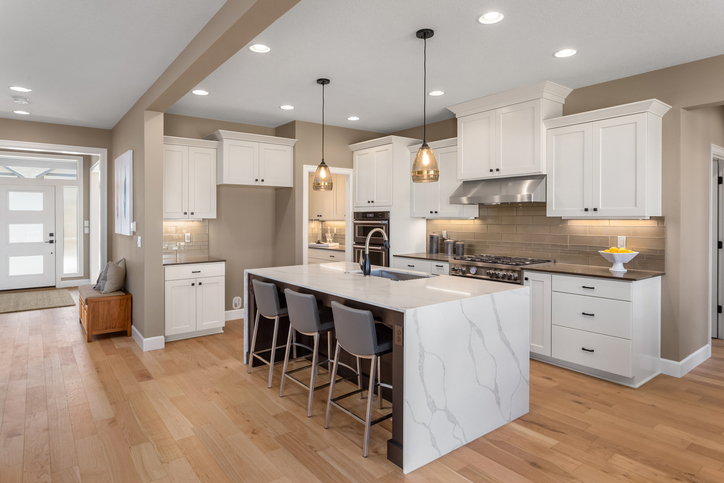
The Fundamental Difference: Nature vs. Engineering
The first thing to keep in mind about quartz vs. granite is that one is created by the earth, and the other is manufactured in a factory.
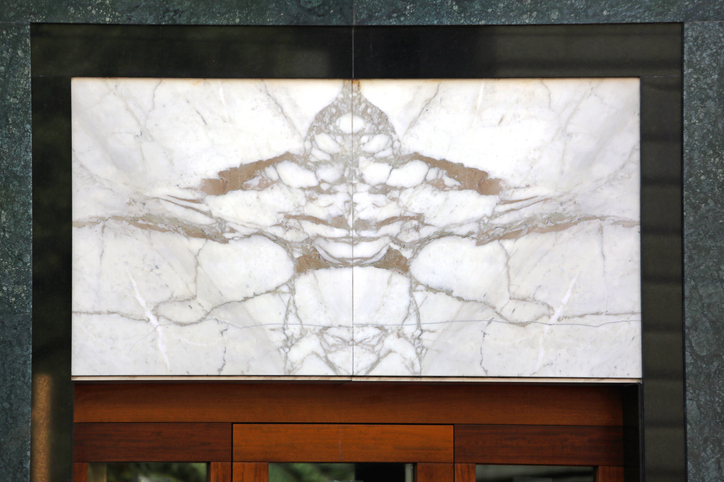
Granite is created in the depths of the earth over millions of years when the molten rock gradually cools and crystallizes. The outcome is a truly distinctive slab with no repeat of mineral patterns, veining, or coloration from one slab to another. When you select granite, you are opting for a material that’s one-of-a-kind.
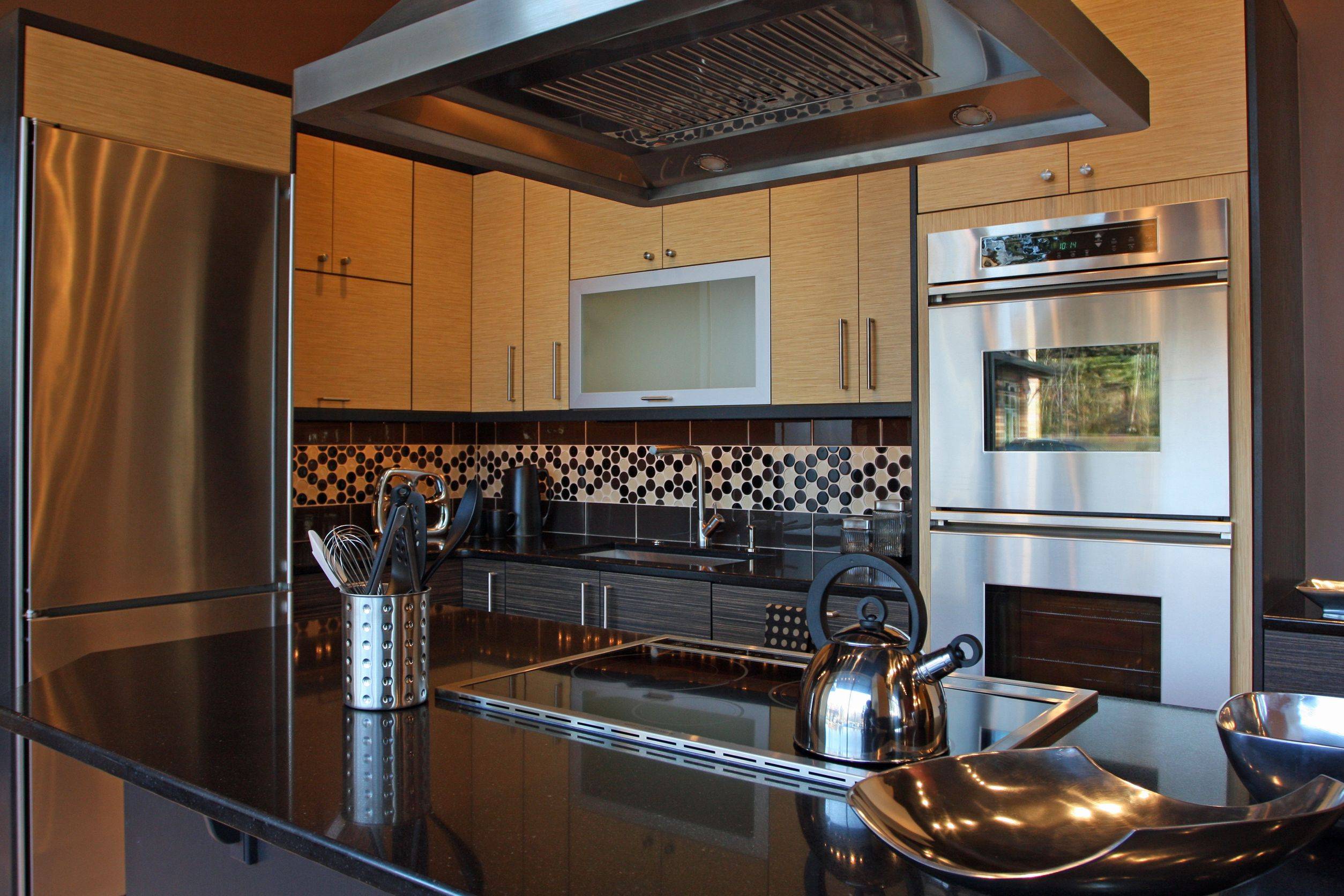
Quartz is engineered. About 90 to 95% of the crushed quartz crystals are bonded together with a polymer resin and pigments, using high temperature and pressure. Designed to ensure exact control of color, texture, and pattern, this means that you always receive the color, texture, and pattern that you see in the showroom.
The takeaway: Whatever you’re looking for is predictable and easy to maintain; quartz will deliver. Granite is unsurpassed for anyone who desires an actual geological material that can’t be reproduced in a factory.
Consistent Beauty vs. One-of-a-Kind Character
What Quartz Looks Like in an Orlando Home
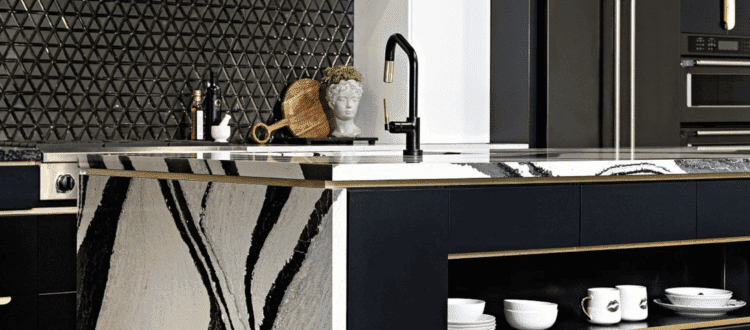
If you visit a new home or a redecorated home in Orlando today, you are likely to spot quartz. One of the reasons it is so popular is the consistency; they include the slab that you like in the showroom, which is the one you get installed. Manufacturers have now perfected the process of creating the marble veining and concrete texture, and even some of the rare exotic stones.
Colors range almost the entire rainbow from bright arctic whites to deep charcoal and smoky blues. Quartz is simpler to coordinate for homeowners who are creating a kitchen concept based on a certain color scheme.
What Granite Looks Like in an Orlando Home
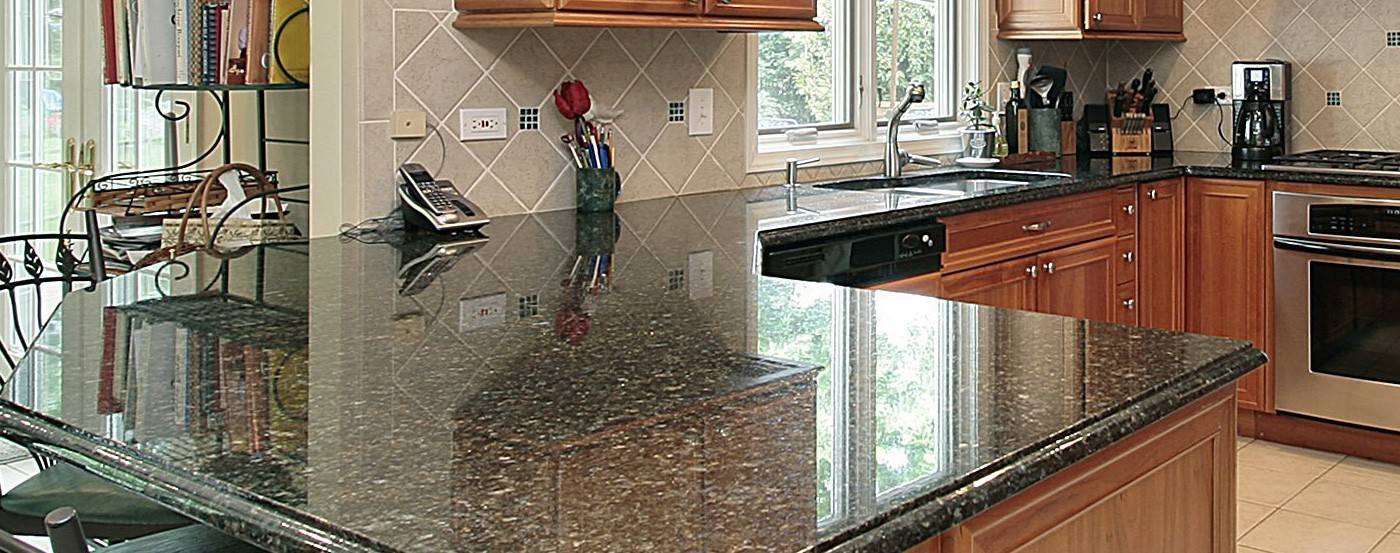
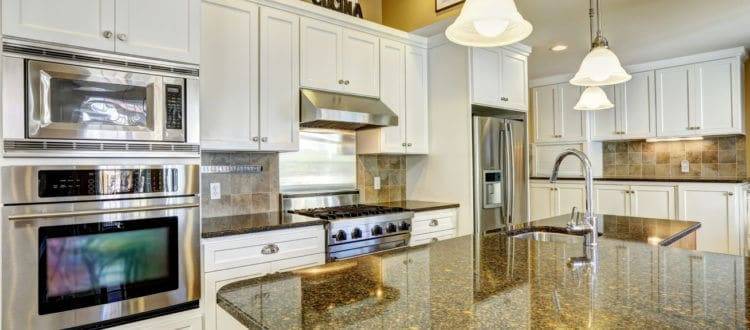
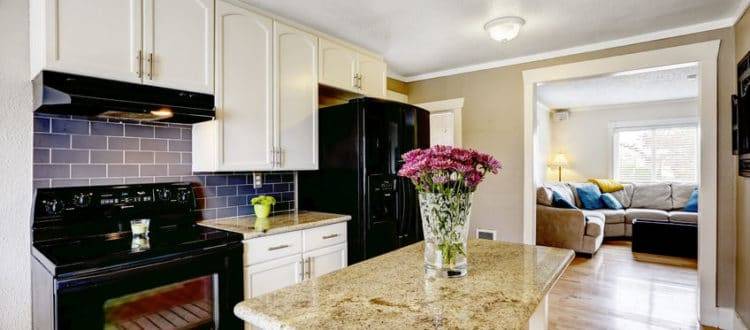
The same is not true of granite. Some of the most popular options in Orlando, such as Venetian Gold, Bianco Romano, or Absolute Black, have an aesthetic depth that engineered stone can’t come close to. The specks of feldspar, strands of quartz, and sweeping veins of mica bring a more dynamic and warm quality to the area, which is perfect for photos, but even better in real life.
The trade-off is variability. The sample at the showroom represents the slab, but it will not be the slab. Expert homeowners come to the stone yard to take the stones of their choice, prior to the fabrication.
Who wins on appearance? For contemporary, simple, or coordinate works, quartz is a good choice. Traditional, transitional, or organic design uses granite for a surface that feels alive.
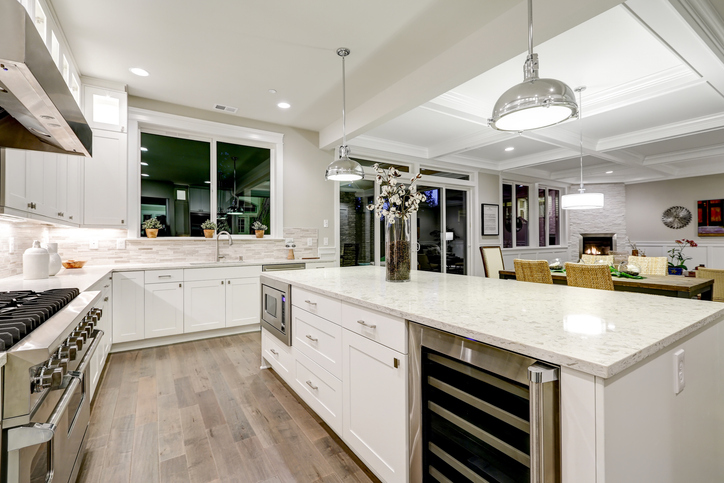
Durability in Orlando’s Climate: Where Each Material Struggles
The durability challenges homeowners in drier climates don’t experience are caused by Orlando’s heat and humidity. Let’s take a look at how each of them performs.
Scratch Resistance
There is some slight advantage to quartz. The resin binder does not allow knives, ceramic cookware, or normal household contact to cause any scoring on the surface, as compared to most natural stones. Granite is also extremely hard, but with use over time, it may be affected by veins of softer minerals that will become noticeable.
Heat Resistance
Granite wins decisively. It was created at temperatures far greater than your stovetop can handle, so a hot cast-iron pan will not cause damage if placed on granite. On quartz, a trivet is not optional; it is essential.
Moisture and Humidity
Orlando’s climate is most important in this regard. Quartz is non-porous, which means that it has no effect from humidity, condensation, or water around the sink. Granite naturally has holes within it. If not sealed on an annual basis, the constant humidity in Orlando throughout the year can allow moisture to seep into the stone, causing it to stain and potentially lead to the build-up of microorganisms within the slab, in severe cases.
Granite, which is well-sealed, is a great choice for the Florida climate. In Orlando, skipping the annual seal is not an option.
Chipping and Impact
These materials both have the ability to break apart at corners and edges if hit hard enough. Quartz is marginally better, because it is engineered to the density. A decorative edge that is not thick in the materials, such as an eased edge or a beveled edge, is more prone to breakage compared with the classic straight edge, on both materials.
Maintenance: The Real Cost Over Time
Living with Quartz Day to Day
All you can do for quartz is clean it up. It is not porous, so spills don’t soak through, and red wine, tomato sauce, and cooking oils won’t leave stains. No sealing schedule, no special stone cleaner needed, and no annual service call.
Daily care is simple:
- Use a microfiber cloth to wipe up spills right away.
- Regularly wipe down with mild dish soap and warm water.
- Always use trivets; never place hot pans directly on the surface.
- Don’t use bleach products, abrasive cleaners, or acidic cleaners.
Living with Granite Day to Day
Granite requires you to do a little more, but it’s not much if you are consistent. The most important requirement is the annual sealing appointment; do not neglect it, and granite will give you decades of reliable service.
Daily care for granite:
- Seal annually with stone impregnating sealer, if a heavy-use kitchen area.
- Clear up spills of citrus, wine, vinegar, and other acids right away.
- Regularly clean with a pH-neutral stone cleaner.
- Don’t use ammonia, bleach, citrus cleaners, or vinegar solutions.
Let’s face it: If you will never remember to seal your countertops again after one year, quartz is the better bet for your Orlando kitchen.
2026 Cost Comparison: Quartz vs Granite in Orlando
Installed pricing will vary by slab grade, thickness (2 cm or 3 cm), edge profile, and the amount of sink and cooktop cutouts. These ranges are intended as a guide only, and a quote is required for each project.
| Cost Factor | Quartz | Granite |
|---|---|---|
| Installed price range | $65 to $100 per sq ft | $55 to $90 per sq ft |
| Entry-level options | Yes, builder-grade slabs | Yes, standard imported slabs |
| Premium options | Yes, exotic engineered patterns | Yes, rare imported natural slabs |
| Annual maintenance cost | Minimal (cleaning supplies only) | $50 to $150 for professional sealing |
| 10-year total cost of ownership | Lower, no sealing needed | Slightly higher, annual sealing adds up |
Edge profile complexity is a key cost driver to watch. Both materials can have a standard square or an eased edge, which is the least expensive option. If you import a slab from an exotic area, such as quartz or granite, and want a mitered waterfall edge, you’ll get a price that is at the high end of the range, or even more.
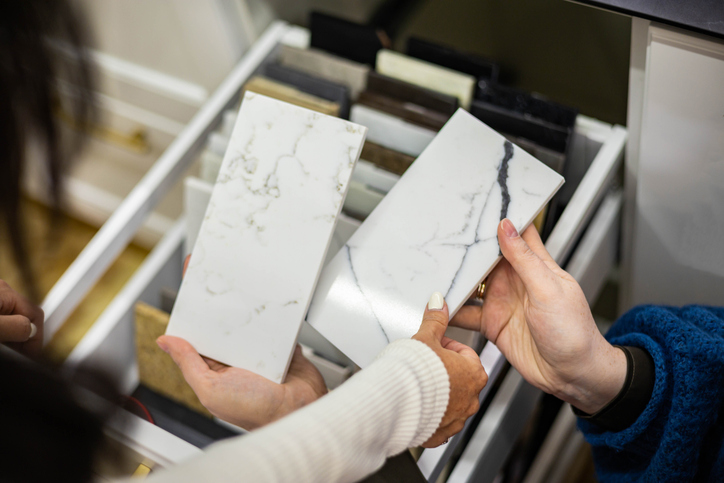
Which Is Right for Your Orlando Kitchen?
The truth is, it’s all up to the way you prepare the food and the things that you value the most. Here is a practical framework that is based on real homeowner scenarios.
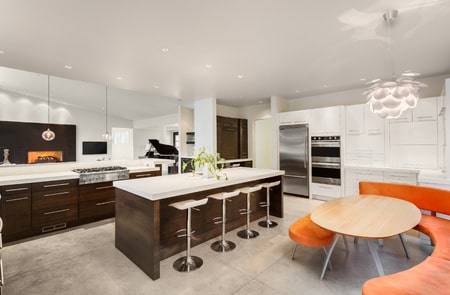
- Every day is a day for cooking, and you have a busy household: Go for quartz. It is food-proof, resistant to cooking oil and food acids, and can be wiped clean after meals. Quartz eliminates the hassle of cooking countertop maintenance for families that do a lot of cooking.
- You’re looking for a kitchen that’s just like no other: Granite is the answer. There is no manufacturer that can make a “slab of Venetian Gold” or “slab of Bianco Romano” that is hand-selected. When you want a truly unique kitchen, nothing else will do but granite.
- You’re renovating on a budget: Granite provides the greater surface area for less money, so it’s a better value on the lower end of the spectrum when cost per square foot is an important factor.
- You’re ready to put your home on the market: Both materials work well with Orlando buyers. Whether it is natural stone or engineered stone, Central Florida home buyers will appreciate the quality of stone countertops and pay attention to the quality of the installation and how the color matches the rest of the kitchen.
Which Is Right for Your Orlando Bathroom?
Bathroom counter surfaces encounter a variety of stressors not found on kitchen surfaces, such as constant humidity, water collecting around sinks, and dryness from personal care substances, like hydrogen peroxide, nail polish remover, and hair care chemicals.
Quartz makes more sense for main bathrooms that are used on a regular basis. The non-porous surface is water-resistant, cosmetics and cleaning-resistant, and won’t stain or allow water to get in. No sealing to remember, even in the room that has constant humidity.
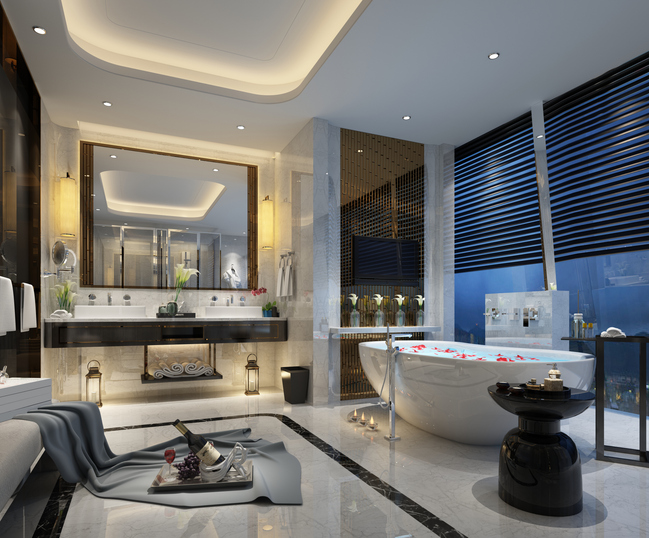
Granite is a wonderful material for bathrooms, for example, in guest bathrooms and powder rooms where there is less foot traffic. For a cohesive and natural stone throughout the home, many Orlando homeowners use the granite that has been installed in their kitchen in other rooms of their home, such as second bathrooms. In a bathroom, sealing requirements are less stringent than those in a kitchen because there will be no exposure to food acids.
The simple guideline: If heavy usage of the primary bathroom occurs daily, then it’s quartz. For a guest bath, powder room, or design first vanity, granite is a beautiful and practical choice.
Frequently Asked Questions
Is quartz or granite more popular for Orlando kitchen remodels in 2026?
Orlando’s new construction and remodeling projects, including homes, have been using quartz for several years now, and it’s all due to its low-maintenance features. Granite is still very popular, especially with homeowners who are seeking a natural stone style and are willing to keep it in good condition. They are both popular and trusted materials in the Central Florida region.
Does quartz or granite add more resale value to an Orlando home?
There is no clear showing of one material over another in the Orlando resale market. Consumers focus on the quality of installation, the countertop beauty in relation to the rest of the kitchen, and the state of the countertop at the time of sale, not the natural or engineered nature of the stone itself.
Can I place hot pans directly on quartz?
No, and this is not up for discussion! Quartz resin can start to turn colors, and may crack or warp if exposed to temperatures above 300°F. Always use a trivet or heat pad. Granite can withstand direct heat from cooking utensils without any harm. It is advisable to use stone trivets on any type of stone surface, as this is good practice for the long term.
How do I know when my granite needs to be resealed?
The easiest test is the water bead test: simply drop a drop of water on the surface to see how it reacts. When water pools and rolls off, the seal is fine. If the water penetrates the stone and turns it dark, it is time to re-seal the stone. If the surface is used heavily for cooking every day, plan to seal it annually as the baseline, and more often in an Orlando kitchen.
Which material is easier to repair if it chips or cracks?
Granite repairs don’t always look so obvious. Natural variation of the stone helps to fill in chips and cracks that have been professionally filled. Quartz repairs are more difficult due to the fact that matching an engineered pattern is extremely difficult. In both instances, the damage is normally too significant to repair cosmetically, and the damaged portion needs to be replaced.
Is granite safe in Orlando’s humidity without sealing?
A granite that is not sealed can pose a serious threat in a humid Orlando climate. With time, water may soak into the stone and cause staining, discoloration, and in extreme cases, microbial growth within the stone slab. In Florida, proper and consistent sealing of granite is essential to its success, and the absence of an annual seal does not come in the same way as it does in a drier climate.
See Both Materials in Person at Our Orlando Showroom
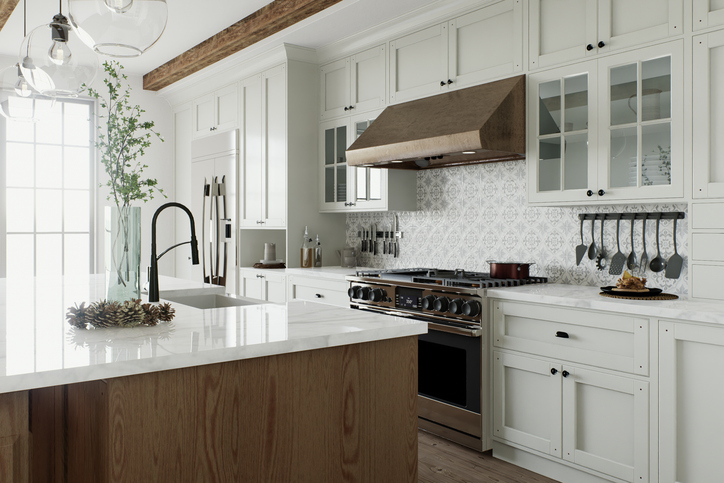
While reading about stone countertops is helpful, nothing can beat seeing it up close and how the light plays on it. Stone Spirit has hundreds of choices in its Orlando showroom of quartz and granite in all price ranges and styles.
You will be able to talk to our countertop experts who can show you the actual slabs that will work for the kitchen, your design preference, budget, and dimensions of your actual project, and give you an accurate quote.
Set up your complimentary consultation today. Come see us in our Orlando showroom or contact us to set up a time that is convenient for you.