

Table of Contents
- What Is Taj Mahal Stone
- The Three Types of Taj Mahal Countertops
- Comparing Your Options
- Which Taj Mahal Countertop Is Right for Your Space
- Is Taj Mahal Actually Granite
- Understanding the Cost of Taj Mahal Countertops
- Making Your Final Decision
- Frequently Asked Questions
Homeowners in Orlando who are looking for “Taj Mahal countertops” may be surprised to learn that “Taj Mahal” is not a single type of material. Rather, it’s a beautiful look that transcends three distinct types of products: natural quartzite, engineered quartz, and porcelain. Knowing these differences is important to selecting the right kitchen or bathroom for you.
We’ve assisted hundreds of homeowners through this process at Stone Spirit. Read on to learn all about Taj Mahal and why it is one of the most popular countertop looks of the last few years.
What Is Taj Mahal Stone
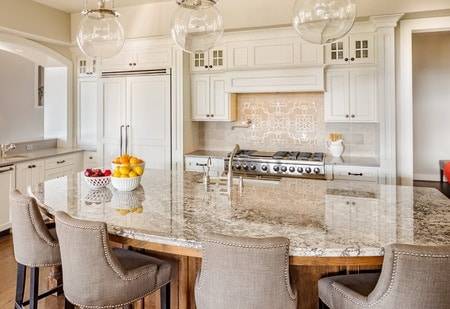
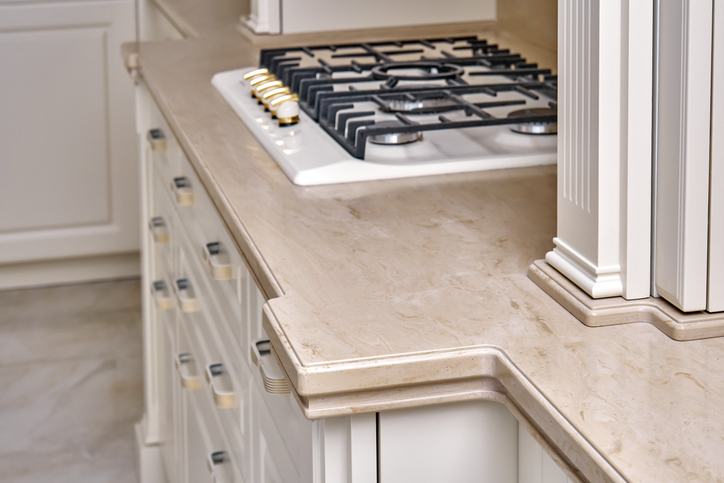
The most unique feature of Taj Mahal is the presence of a golden-cream backdrop, with sweeping taupe and gray veining that provide an elegant and sophisticated look. It’s not so much that the stone is actually from India, but rather that its color is inspired by the famous mausoleum’s palettes in India.
This style really hit the sweet spot for designers and homeowners because it provides warmth but not rockstar-level. The veining is highly interesting, but not so busy you lose focus. The end result is a countertop that looks great with modern, traditional, transitional, and even eclectic kitchen designs.
The Three Types of Taj Mahal Countertops
Natural Taj Mahal Quartzite
This is the ‘real thing’ in the world of Taj Mahal countertops. The natural Taj Mahal quartzite is only mined in Brazilian quarries; it is also called in the stone industry as Perla Venata. A metamorphic stone that slowly forms over millions of years, with a warm, ivory and cream base with gold and beige veining.
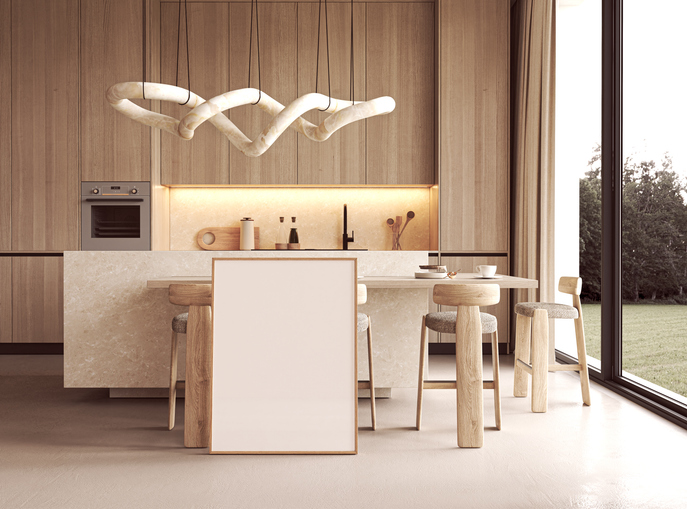
Taj Mahal is one option among Stone Spirit’s full range of quartzite countertops, if you want to see how it compares to other patterns.
There are a few large U.S. distributors that sell natural Taj Mahal quartzite, such as MSI Surfaces, Bedrosians, Arizona Tile, Pental Surfaces, and United Granite (for NJ and NY markets). It is crucial, however, to be aware that not one specific company ‘makes’ this stone. These distributors, however, have to come from Brazilian quarries and choose the grade slabs they will distribute.
Grade Matters: Premium grade slabs have a uniform ivory/beige color with dramatic, beautiful veining and very low impurity. The polished, honed, and leathered finishes that can be applied to these slabs work well and bring greater value. Commercial Taj Mahal can be drab; less dramatic veining and more impurities are evident. Commercial grade countertops are much more budget-friendly, but they certainly don’t blend in quite as well in a completed kitchen.
There is a caution: some of the lower-level suppliers mark softer marble as quartzite, and then sell it at a premium quartzite price. Regular kitchen acids (citrus juice or wine, etc.) will cause etching and staining of the marble sold under the Taj Mahal name. Always check to be certain your supplier is actually selling quartzite.
Pricing: The cost of installed natural quartzite Taj Mahal typically falls between $100 and $220 per square foot, with most projects costing between $120 and $180 per square foot, depending on the grade of the quartzite slab, thickness, edge profiles, and cutouts. The average total cost of a standard kitchen (30 to 40 square feet) installed by a professional is $3,600 to $7,200.
Maintenance: Natural quartzite needs to be sealed every one to three years to keep it stain-resistant, in line with Natural Stone Institute care guidance. It is not hard to do, but it’s a continuous effort. It has exceptional resistance to heat and UV rays and is suitable for use in kitchens where durability is a requirement.
Engineered Quartz: Taj Mahal-Inspired Versions
Due to the popularity of natural Taj Mahal, large quartz manufacturers have created engineered versions of this. They are manufactured goods made up of a mix of around 93 percent crushed quartz and resin binders. They are not natural stone but have a number of benefits related to consistency and maintenance.
There are a few brands that make engineered quartz that has a Taj Mahal design:
- Cambria patterns are available in various product names, and all Cambria pieces are 100% made in the USA. They are top-quality choices in the category of quartz, indicative of strong manufacturing standards.
- Silestone by Cosentino, a Spanish product, offers a design called Taj Mahal with extensive finish options and the capability to choose the exact appearance of the counter.
- Made in Israel, Caesarstone offers a Taj Mahal-inspired design called Taj Royale, a beige quartz with dark brown veining.
- MSI Q Quartz’s budget option is called “Lumataj”, which is an engineered quartz sourced from Asia, and offers great value to homeowners who are not compromising on their budget.
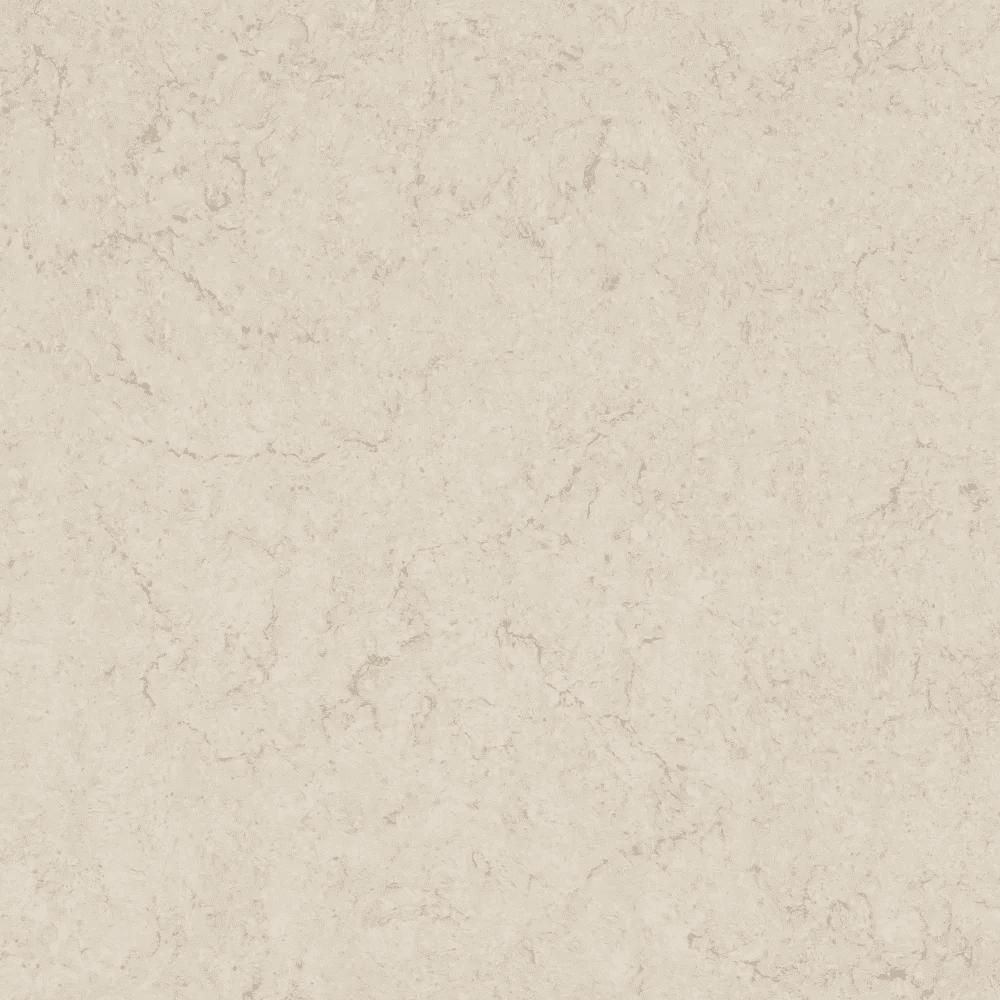
Taj Mahal is just one of many looks available across Stone Spirit’s quartz countertops in Orlando.
Pricing: The cost of engineered quartz installations is generally in the $70 to $120 per square foot range. Many homeowners will find the lower initial investment than using natural stone an appealing choice. No sealing is necessary, and patterns are totally consistent from slab to slab, preferred by some buyers for their aesthetic consistency.
Maintenance: Engineered quartz is very easy to take care of. It does not require sealing and is stain-resistant. Heat resistance is good, but it can scorch with direct and prolonged heat exposure above 300°F. Always use hot pans with trivets.
Porcelain Slabs
Some porcelain and sintered stone manufacturers create large-dimension slabs designed to capture the Taj Mahal look, including Dekton by Cosentino, Neolith, and Atlas Plan. Pricing is competitive with engineered quartz rather than the cheapest option on the list, and porcelain is virtually maintenance-free. It is not natural stone, though, and is not quite as widely used for homes as a kitchen stone. Stone Spirit also carries a full line of porcelain countertops beyond the Taj Mahal look.
Comparing Your Options
Here’s how these three materials stack up against each other:
| Feature | Natural Quartzite | Engineered Quartz | Porcelain |
|---|---|---|---|
| Origin | Brazil (quarried) | Factory-made | Factory-made |
| Sealing | Required every 1 to 3 years | Never | Never |
| Heat Resistance | Excellent | Good (resin limit at 300°F) | Excellent |
| Uniqueness | Every slab different | Identical patterns per color | Identical patterns |
| Price (installed) | $100 to $220/sq ft | $70 to $120/sq ft | $60 to $150/sq ft |
| Durability | Very high | High | High |
Which Taj Mahal Countertop Is Right for Your Space
So, which of the different types of Taj Mahal countertops is best for your space? It depends on your lifestyle, cooking habits, and preferences.
- If you consider your countertops an investment piece and are prepared to seal the surface periodically, choose Natural Taj Mahal Quartzite. You like the intrinsic qualities of natural stone and understand that each slab is different. You frequently host guests and want a piece that will make a statement. You don’t mind hands-on maintenance in exchange for authenticity and one-of-a-kind beauty.
- If you have a lot of people cooking in your home and a large family to feed, opt for Engineered Quartz. Consistent, predictable slab-to-slab looks are desired. You like easy things and don’t want to have to seal anything. You’re on a budget but still want that Taj Mahal style. You’re looking to live in your home for 5 to 10 years and want durability without the maintenance.
- If zero maintenance is the top priority, look at Porcelain. Pricing is competitive with engineered quartz rather than the cheapest option on the list. You prefer a contemporary and simple style. Your kitchen is used on a regular basis, and you need something that will last a long time.
Is Taj Mahal Actually Granite
This is the most frequently made mistake that we come across. Many seek “Taj Mahal granite,” but it is not granite at all. Taj Mahal is actually quartzite, a totally different stone with totally different properties.
Granite is an igneous rock that is mainly made up of quartz, feldspar, and mica. Quartzite is a metamorphic rock, created from sandstone through a process of intense heat and pressure. This is important because quartzite tends to withstand heat and UV fading and is tougher than granite. Sealing is important; however, some granites may be more porous than quartzite. If you want to compare the two side by side, Stone Spirit’s granite countertops page covers the differences in more depth.
Knowing this difference gives you realistic expectations of the performance and maintenance of your countertop.
Understanding the Cost of Taj Mahal Countertops
There are a number of factors that affect the installed cost of a Taj Mahal countertop:
- Slab Grade: Natural quartzite of premium grade is much more expensive than commercial grade. The uniformity, veining pattern, and lack of impurities all help fetch higher prices.
- Thickness: Quartzite slabs typically come in 2 cm (about 3/4″) or 3 cm (about 1.25″) thicknesses, with 3 cm being the standard choice for kitchen countertops. A thicker, more dramatic edge look is usually achieved with a mitered edge rather than a solid thicker slab, and adds cost.
- Edge Profile: Simple straight edges are the least costly. Edges such as beveled, bullnose, or decorative add cost per linear foot. A large island with an elaborate edge profile can add up to a significant expense for your project.
- Fabrication Details: Any cooktop cutout, special sink openings, and odd angles will add labor and material. A simple, straightforward layout reduces complexity and cost.
- Final pricing can vary based on installation logistics such as the removal of existing countertops, cabinet modifications, and delivery distance. There may be cost savings on local sourcing.
We are proud to offer hand-selected slabs from around the world at Stone Spirit with no hidden costs or mark-up on prices.
Making Your Final Decision
There is a difference between natural quartzite, engineered quartz, and porcelain, and it’s important to examine your priorities and make that decision. Do you own your home or are you renting or moving? What time commitment are you willing to make for maintenance? What is your budget reality, not your budget ideal?
The good news about Taj Mahal is that all three options offer the same aesthetic in terms of beauty. With whichever material you choose, you’ll get that sophisticated, cream and taupe elegance. The disparities are in maintenance, price, and the feel of a piece of natural stone versus one that is consistent and easier to maintain. If you’re weighing quartz and quartzite options beyond Taj Mahal, see our picks for the best quartz and quartzite countertops in Orlando.
Frequently Asked Questions
What exactly is Taj Mahal quartzite?
It is a metamorphic stone, quarried in Brazil, with an ivory and cream color background and gold and beige veining. Also known as Perla Venata in the stone industry.
Is Taj Mahal quartzite the same as Taj Mahal granite?
No, Taj Mahal isn’t made of granite. These are different stones with different characteristics. Quartzite is more resistant to heat and more difficult to cut than most granites.
How much does Taj Mahal quartzite cost in my area?
The cost of natural quartzite is $100 to $220 per square foot installed. Engineered quartz countertops range in price from $70 to $120 per sq ft. Get a free estimate from Stone Spirit in the local area.
How does Taj Mahal quartzite compare to Caesarstone Taj Royale quartz?
Natural quartzite is more expensive and requires periodic sealing, but each slab is one of a kind. Caesarstone’s engineered quartz has consistent patterns, doesn’t require sealing, and is less expensive. Both have a wonderful Taj Mahal feel.
Does Taj Mahal quartzite need sealing?
Yes, reseal every one to three years as needed. Sealing is simple, but necessary to keep the stain resistance.
Is Taj Mahal porcelain suitable for outdoor kitchens in hot climates?
Absolutely. Porcelain and sintered stone materials such as Dekton are known for their heat and UV resistance, making them suitable for Florida’s covered outdoor areas and similar climates.
Which Taj Mahal option is best for a busy household?
Engineered quartz or porcelain. They both remove the need for sealing and are highly stain-resistant. Natural quartzite is a beautiful material, but not as easy to maintain.
Your Next Step
Looking for a new look for your Orlando home with countertops made from Taj Mahal? Stone Spirit has the expertise to source stone around the world and sets the price transparently for each project. From the irreplaceable beauty of a natural Brazilian quartzite to the practical elegance of an engineered quartz, we’ll help you select the right Taj Mahal countertop for your space, lifestyle, and budget.
Schedule your free consultation today or contact us to see samples in person.