



Material-Specific Seam Behaviors: A Deeper Dive
Countertops also have different seam characteristics that have a strong impact on the appearance and performance in the long run. How material naturally responds to variations, its structure, porosity, hardness, and fabrication processes are some of the key elements that determine how seams will look and sustain over time. These nuances will guide homeowners on effective decisions depending on their preferences and tastes, as well as the functionality of the goods and services. We have discussed each major type of countertop in more detail below. Countertop seams can either create a smooth and seamless look or ruin the whole appeal.
Granite: Durable but Variable
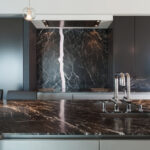
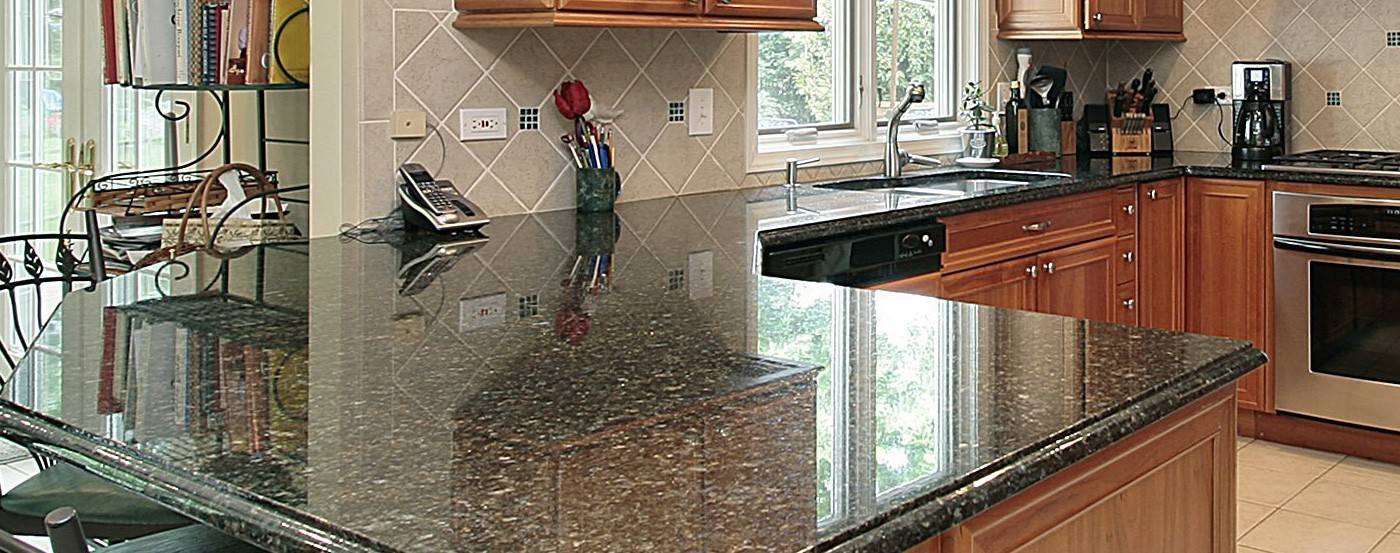
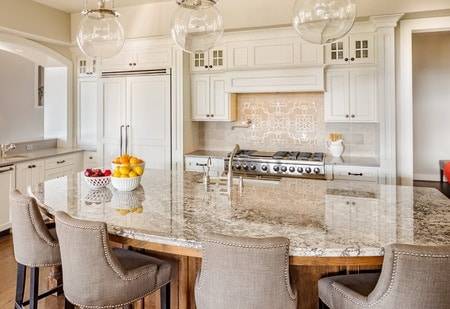
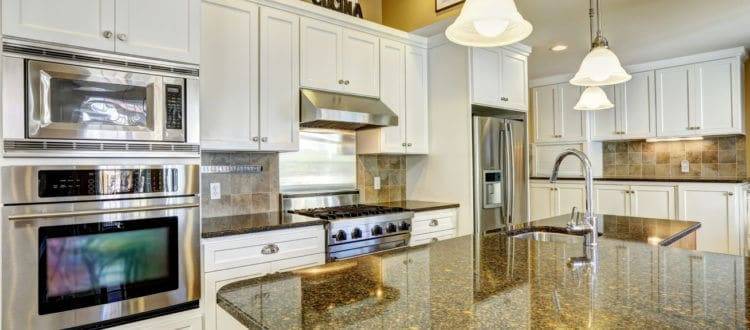
Granite, a natural igneous rock, has intricate speckling, mottling, and veining, which may successfully conceal the seams in the more active patterns such as the Santa Cecilia or Uba Tuba. Nevertheless, even within the same batch of quarry, there can be a significant difference between slabs, which may result in observable color changes or disordered veining at the joints that may need to be carefully chosen during the layout. It is porous in nature, and therefore the seams have to be stuffed with high-quality and color-matched epoxy and sealed completely to avoid staining by oils, wines, or acids that would darken the joint as time progresses. Multi-step polishing is a technique of skilled fabricators to make the seam completely flat and merged, reducing any edges raised or halos. In spite of these difficulties, the overall strength of granite makes the seams very strong to withstand day-to-day wear.
Engineered Quartz: The Seam-Hiding Leader
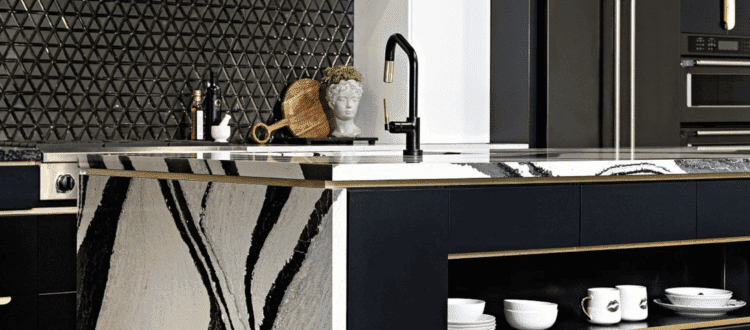
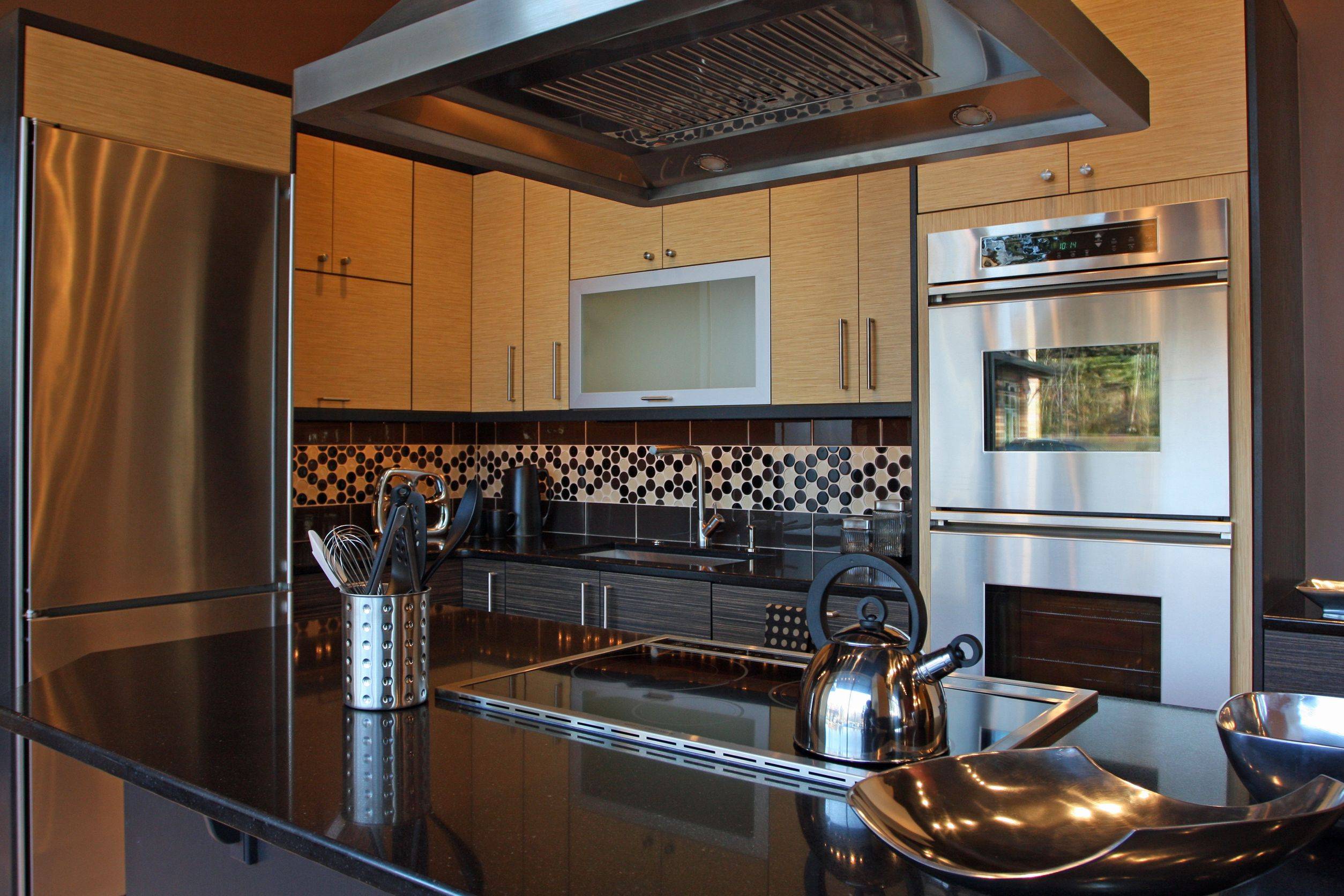
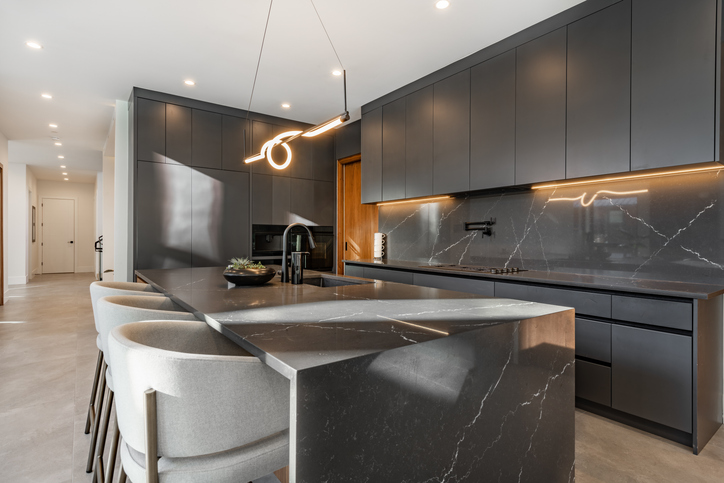
The special feature of engineered quartz is that the consistency of color, pattern, and thickness is ensured in a production process so that fabricators are able to make the seams very tight and almost invisible through accurate cutting and special adhesives. Epoxies are brand-specific, with the resin base, to ensure that they do not yellow, discolour, or separate even when subjected to heat or UV radiation. Veined decorations that imitate Calacatta marble (like the offerings of Cambria or Silestone) can be enabled to move smoothly across the joints in case the slabs are book-matched. This consistency minimises chances of visible discrepancies, and thus quartz is perfect in large islands where minimal stitching is required. All in all, quartz seams are some of the strongest and most inconspicuous slab materials.
Marble: Elegance with Challenges
The luxury and dramatic veining and transparency of marble require the skill of book-matching, matching the veins on the slabs like the pages in a book, to give the actual appearance of a seamless look, although this is not always easy due to natural variations. It is quite soft (Mohs hardness 3-5), which makes it prone to chipping or etching along seam edges as a result of impacts or acidic solutions. Translucency may lead to filler material being visible in some circumstances when lit, despite being in full joints. Computerized seals should be used regularly to prevent staining of porous seams, but honed finishes might conceal flaws better than polished ones. Nevertheless, the objections are overcome by the age-old grace of marble, which pays off perfectly.
Quartzite: Natural Yet Forgiving
Confused with quartz, pure quartzite is a metamorphic natural rock that is exceptionally hard (Mohs 7), which has unusual veining and coloration in addition to superior scratch and etching resistance compared to marble. Standardized types such as Taj Mahal or Sea Pearl are highly suitable for hiding the seam since the patterns are soft and the backgrounds are regular. The density of the material is advantageous to seams, which are not only demanding in terms of the use of strong epoxies, but also can withstand a long life without any re-work. Still, the variability in slabs requires close matching, resulting in a discreet joint. Quartzite offers an elite appearance of natural stones with satisfactory seam functionality.
Laminate: Affordable but Vulnerable
Laminate countertops are manufactured by attaching sheets of thin decorative material to a base, and joints are commonly created by glued butt joints or a mitered edge, which may seem tight at first, but is likely to fail over time. Peeling, swelling, or delamination of joints at the sink is a common problem with moisture at the sinks or the steam, particularly in low-end installations. Hot pans may bend, causing observable holes or burnt spots. Edges are vulnerable to chipping in their daily use, and it is difficult to repair without cutting out some parts. Although cheap and sold in unlimited designs, the laminate seams also require some good care to prevent premature showing off.
Solid Surface Acrylics (Corian, Avonite)
Hard surface materials such as Corian are good at real seamless installation with thermo-chemical bonding, where components are bonded by using complementary resin and freezing smoothly. It enables the use of complex shapes, coved backsplashes, and integrated sinks with no exposed joints, which is good in terms of hygiene as crevices are eliminated. Non-porous composition is not porous, and it is resistant to stains and bacteria at the seams, which are virtually invisible. Although it is not as resistant to heat and scratches as stone, its renewal by being sanded down is simple. It should be used in modern minimalistic designs that want the absence of seams.
Concrete: Custom but Risky
Poured concrete countertops can provide totally smooth surfaces with the construction of the countertop in place, so there is no joint whatsoever, allowing for the creation of an entire island or the creation of unusual forms. To overcome the shrinkage cracking that may develop during curing, a reinforcement with rebar or fibers is essential to prevent the appearance of seam lines, which can otherwise resemble seam lines. Endless customization is made possible by pigments and aggregates; however, sealing is necessary to avoid staining in porous material. Superficial finishes, such as polishing, can cause a hairline crack to occur with time. Optimal in terms of industrial or artisanal looks and masterly workmanship.
Porcelain and Sintered Stone (Dekton, Neolith)
The frequency of seams in most layouts is dramatically minimized in these ultra-large, thin slabs (which are usually 126×56 inches or larger), though the consistency of the pattern across joints is guaranteed by digital printing. Sintering produces high-tech surfaces that are not porous, extremely durable, and hard to heat, scratch, and fade under sunlight. Seams are small and inconspicuous as a result of the accurate fabrication of edges and similar adhesives. The brittle needs to be done with care to prevent chipping in the process of installation. Outstanding when used outdoors or when there is heavy traffic, and the line is not to be seen much.
Wood and Butcher Block
Butcher block seams are normally glued at the edge, or finger-joined, which presents as continuations of natural grains that reasonably blend together when the species of wood are the same. The fluctuation of humidity leads to expansion and contraction, which may create gaps that are not sealed with frequent treatments of mineral oil. The end-grain blocks conceal the seams more, but are more labor-intensive; the edge-grain blocks reveal more of the joints. Food-safe finishes are necessary in areas around preparation zones, and when sanding, they help renovate scoured edges. Renewable and warm with characterful and visible-but-organic joints.
Soapstone, Slate, and Exotic Options
The thick, uniform, and somewhat matte surface of soapstone and the slight veinage permit the seam to be virtually filled up with colored wax or epoxy, and the surface acquires a uniform patina with time. It does not take up stains at joints, and its resistance to the formation of stains after the use of mineral oil is high. Slate can also have a comparable rustic seam cover with its stratified look, although the planes of cleavage must be cut cautiously. Exotic stones such as onyx or travertine are also diverse, such as translucent onyx, which can be used to illuminate seams. These choices offer low-maintenance seam performance, which is distinct and is used with unique designs.